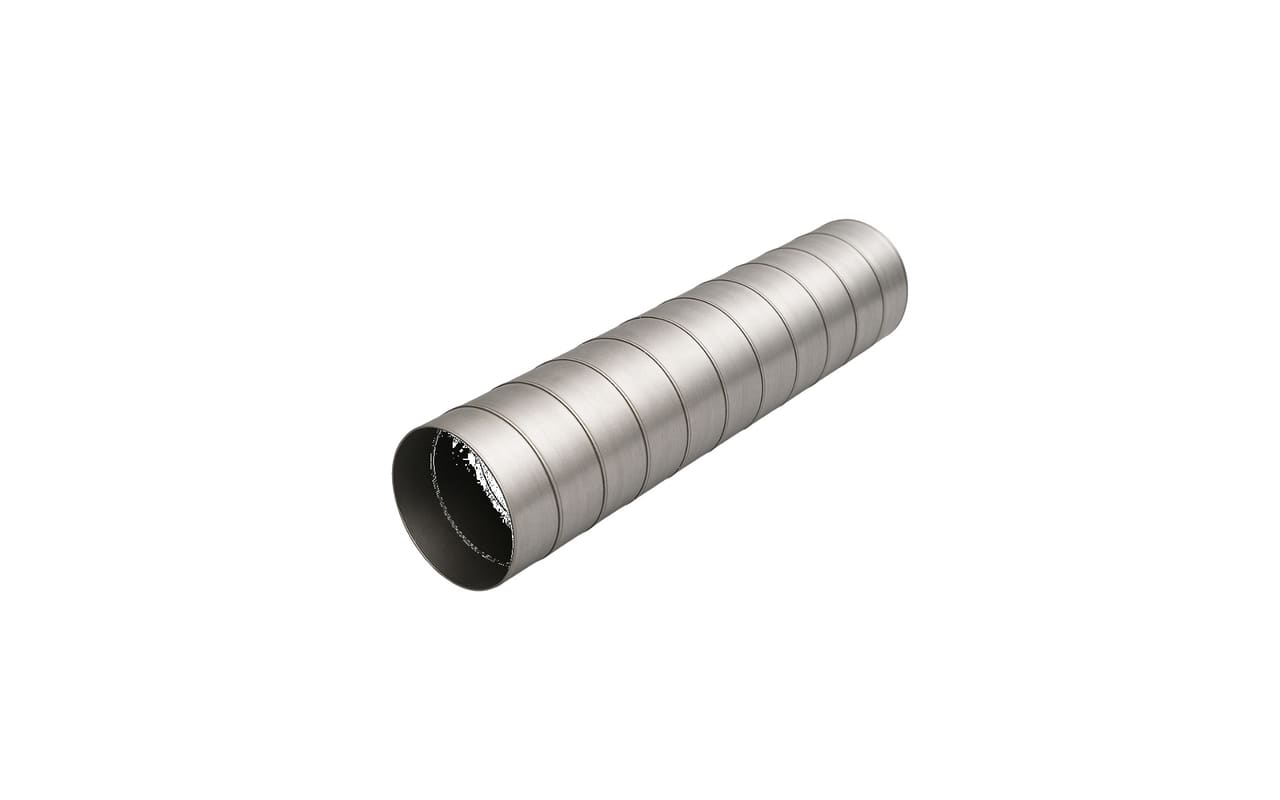
RIGID and Flexible Duct
PVC and silicone-coated flexible ducts and connectors — non-insulated, insulated, semi-rigid and fire-rated variants.
About the RIGID and Flexible Duct
Flexible duct is what gets you the last 1–3 metres from a rigid main into a diffuser. The right variant matters: non-insulated for short return runs, insulated for conditioned-air supply (avoids condensation drip), semi-rigid for higher-velocity systems where ordinary flex would collapse, and fire-rated for routes that pierce a fire compartment. PVC-coated to 85 °C handles general work; silicone-coated to 270 °C handles fume and smoke duty.
Engineering Advantages
Four variants cover non-insulated, insulated, semi-rigid and fire-rated duty
PVC-coated for standard service / silicone-coated for hot, smoke or grease duty
High anti-tear and tensile strength — longer life than commodity flex
Standard 25 ft (non-insulated/insulated) and 10 ft (semi-rigid/fire-rated) cut lengths
Key Features
- Available in PVC-coated and silicone-coated fabric
- Fire-retardant PVC fabric — Class “B”, suitable up to 85 °C
- Fireproof silicone fabric — tested up to 270 °C for 1 hour
- High anti-tear and tensile strength for longer life
Available Variants
| Type | Size Range | Length |
|---|---|---|
| Non-insulated | 100–500 mm | 25 ft |
| Insulated | 100–450 mm | 25 ft |
| Semi-rigid | 75–500 mm | 10 ft |
| Fire-rated | 100–450 mm | 10 ft |
Construction & Materials
- Spring-steel wire helix for crush resistance
- Inner: PVC- or silicone-coated polyester fabric
- Outer: aluminised PE / polyester scrim layer
- Insulated variants: 25 mm glass-wool blanket between liners
How to Choose the Right Variant
- 1Insulated: any conditioned-air run that crosses an unconditioned space (prevents condensation)
- 2Semi-rigid: high-velocity / high-suction systems, or runs subject to crush
- 3Fire-rated: any flex that crosses a fire-rated wall or shaft
- 4Keep flex runs short (≤ 3 m) and gentle — every 90° bend cuts airflow ~10%
Installation Notes
- Stretch the flex fully before clamping — a compressed flex doubles its pressure loss
- Use a metal collar with worm-drive clamp at every joint, sealed with mastic
- Avoid kinks; bends should be ≥ 1.5× duct diameter
- Support every 1.2 m with a 25 mm-wide saddle to prevent sagging
Maintenance Schedule
- Inspect joints annually for slippage and air leaks
- Replace any flex showing a crush, kink or abrasion through the outer scrim
Industries Served
Standards & Compliance
- PVC-coated fabric — Class B fire-retardant
- Silicone-coated fabric — tested to 270 °C / 1 hour
- Designed in line with SMACNA flexible duct installation guidance
Frequently Asked Questions
How long can a flex duct run be?
Best practice is to keep it under 3 m and as straight as possible. Beyond that, the pressure-loss penalty compared to rigid duct becomes severe.
When do I need fire-rated flex?
Whenever the duct crosses a fire-rated wall or shaft, local building codes typically require fire-rated flex (or a fire damper plus standard flex).
Related HVAC Air Ducts
Need help selecting the right fan?
Our engineers will help you size the rigid and flexible duct to your exact application — capacity, static pressure, and installation constraints.