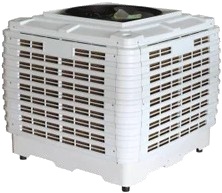
Industrial Cooler (M-300 / M-180)
Ducted-exhaust industrial cooler with auto-clean drain valve. Two models for industrial and commercial spaces.
About the Industrial Cooler (M-300 / M-180)
Two-stage evaporative cooling for industrial spaces: the M-180 (18,000 CMH) covers individual workshop bays and the M-300 (30,000 CMH) handles large factory halls. Both ship with auto-clean drain valves that flush mineral-rich water before it can crystallise on the pads, which is the single biggest cause of capacity loss in poorly-maintained coolers. Ducted-exhaust configuration lets the unit sit on the roof or outside the building and discharge cool air to where it is needed.
Engineering Advantages
Cools at 8–10× the energy efficiency of compressor AC in dry climates
Auto-clean drain prevents salt buildup — the #1 cause of capacity loss
Two models cover the typical 18,000 / 30,000 CMH industrial bay sizes
Outdoor / rooftop install — discharge ducted to the work area
Key Features
- Ducted exhaust
- Auto-clean drain valve
Technical Specifications
| Size | Air Flow | Voltage | Power | Sound | Weight |
|---|---|---|---|---|---|
| M-300 | 30,000 CMH | 415 V | 3,000 W | < 80 dBA | 100 kg |
| M-180 | 18,000 CMH | 220 / 415 V | 1,100 W | < 70 dBA | 55 kg |
Construction & Materials
- Galvanised + powder-coated body for outdoor service
- CELdek-style cellulose evaporative pads, 100 mm or 150 mm thick
- Cast-iron centrifugal blower with belt drive (M-300) / direct drive (M-180)
- Auto-clean drain valve on a programmable timer
- Float-controlled water inlet with overflow protection
How to Choose the Right Variant
- 1Pick by required CMH: ~25 air changes per hour for hot dry workshops
- 2Best results when entering air is dry (low wet-bulb) — performance falls in humid weather
- 3Provide fresh water at minimum 1 bar pressure
- 4Plan a drain run to a building waste line or floor drain
Installation Notes
- Mount on a structural roof curb or outdoor base — never inside the workspace
- Slope discharge ducts back to the cooler with a small drain stub
- Provide make-up air opening in the workspace at low level
- Soft water improves pad life — install a softener if water TDS > 300 ppm
Maintenance Schedule
- Replace evaporative pads every 18–24 months
- Clean float valve and water tank quarterly
- Verify auto-drain operation monthly during cooling season
- Drain and dry the cooler at the end of every cooling season
Industries Served
Standards & Compliance
- Pad efficiency tested in line with ASHRAE 133 evaporative-cooler practice
- Galvanised structure to IS 277 zinc coating
Frequently Asked Questions
How much will it lower the air temperature?
Typically 6–12 °C drop in dry climates (low wet-bulb temperature). In humid weather the drop falls to 3–5 °C — evaporative cooling cannot lower air below the wet-bulb temperature.
How much water does it use?
About 25–50 litres per hour for the M-180 and 50–80 litres per hour for the M-300, depending on outdoor conditions and the auto-drain cycle.
Can it replace an air-conditioner?
Only in dry climates and where personnel comfort is the goal. For humidity control or process cooling, you still need refrigeration-based AC.
Need help selecting the right fan?
Our engineers will help you size the industrial cooler (m-300 / m-180) to your exact application — capacity, static pressure, and installation constraints.