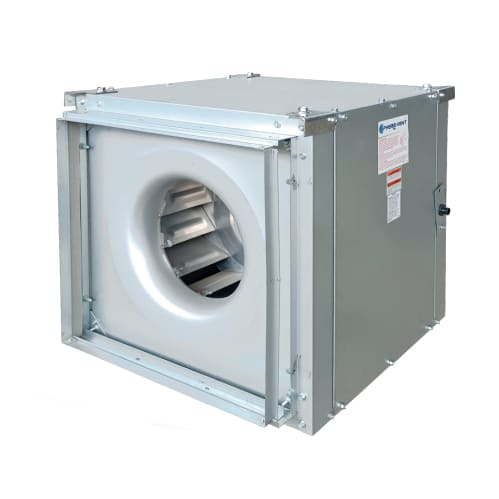
Direct Drive Duct Cabinet Inline Fan
Compact direct-drive cabinet fan with backward-inclined aluminium impeller for clean-air supply and general ventilation.
About the Direct Drive Duct Cabinet Inline Fan
A direct-drive inline cabinet fan houses a backward-inclined centrifugal impeller in a square sheet-metal cabinet, with the motor coupled directly to the impeller shaft. Eliminating belts, pulleys and bearings reduces maintenance to almost zero, lowers the noise floor, and keeps overall depth shallow enough to drop into a duct run or fit above a false ceiling. The aviation-grade aluminium impeller keeps inertia low, allowing the motor to come up to speed quickly without large starting currents.
Engineering Advantages
No belts, no pulleys — virtually maintenance-free drive train
Backward-inclined blades are non-overloading: motor will not overload if system resistance increases
Statically and dynamically balanced impeller for low vibration and longer bearing life
Square cabinet form factor sits flat against duct flanges with no transition pieces required
Key Features
- Galvanised housing construction
- Backward-inclined, aviation-grade aluminium impeller
- Low power consumption / low sound level
- Compact size, installation flexibility, ease of service
- Available in single and three phase
- Optional: air pre-filter and 25 mm insulated housing
Construction & Materials
- High-GSM galvanised steel cabinet, powder-coated for corrosion resistance
- Aviation-grade aluminium impeller — light, rigid, corrosion-resistant
- IP 55-rated TEFC induction motor with sealed ball bearings (single or three phase)
- Inlet cone matched to impeller eye for stable, low-loss airflow
- Optional 25 mm acoustic-thermal liner for noise / heat-loss reduction
- Matching rectangular flanges on inlet and outlet for direct duct mating
How to Choose the Right Variant
- 1Calculate required airflow (CMH) from room volume × air-change rate
- 2Estimate total static pressure: filters + coils + duct friction + outlet loss
- 3Add 10–15% safety margin to account for filter loading over service life
- 4Match the fan-curve operating point so the fan runs near its peak-efficiency zone
Installation Notes
- Mount on vibration-isolating spring or rubber pads to prevent structure-borne noise
- Use flexible duct connectors at both inlet and outlet to decouple fan vibration from ducting
- Provide minimum 1× duct diameter of straight duct upstream of the inlet for stable flow
- Service-clearance: minimum 600 mm on the motor side for routine inspection and removal
Maintenance Schedule
- Inspect impeller and inlet cone every 6 months for dust build-up — clean with soft brush
- Check motor bearings annually; lubricate if greasable
- Tighten impeller hub fasteners on first commissioning and again at 3 months
Industries Served
Standards & Compliance
- Performance tested in line with AMCA 210 / ISO 5801 practice
- Galvanised steel to IS 277 / equivalent
- Motor designed to IE2/IE3 efficiency class on request
Frequently Asked Questions
When should I pick direct-drive over belt-driven?
Direct-drive is best when system static pressure is below ~30 mmwg, when low maintenance matters, and when the duty is continuous. Belt-driven becomes preferable above ~40 mmwg or where speed change via pulley swap is desired.
Is the 25 mm insulated housing worth it?
Yes for any installation near occupied space, conference rooms, or bedrooms — it cuts breakout noise by 4–8 dBA depending on frequency. It also reduces thermal losses for conditioned-air supply runs.
Can this run continuously 24/7?
Yes. The TEFC motor is rated S1 (continuous duty) and the bearings are sized for L10 ≥ 40,000 hours under typical load.
Related Centrifugal Fans
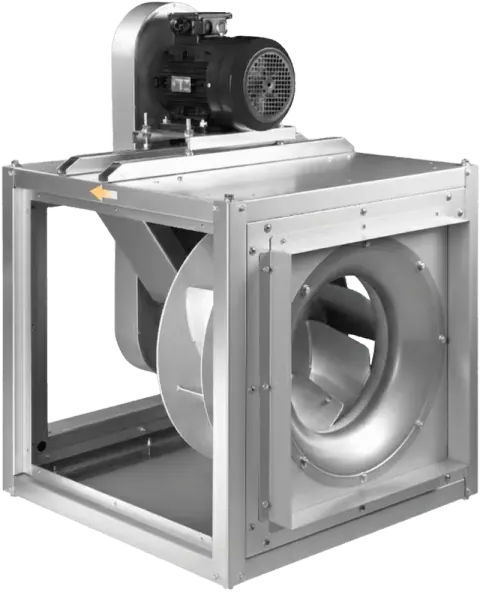
Belt Driven Cabinet Fans
Heavy-duty belt-driven cabinet fan for kitchen, smoke-spill and pressurisation duty — indoor and outdoor.
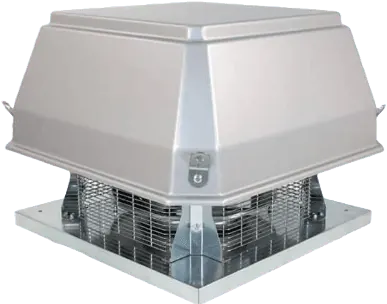
Power Roof Ventilators (Upblast Fan)
Roof-mounted upblast ventilator with rhombus hood, weather-tight curb cap and aluminium impeller.
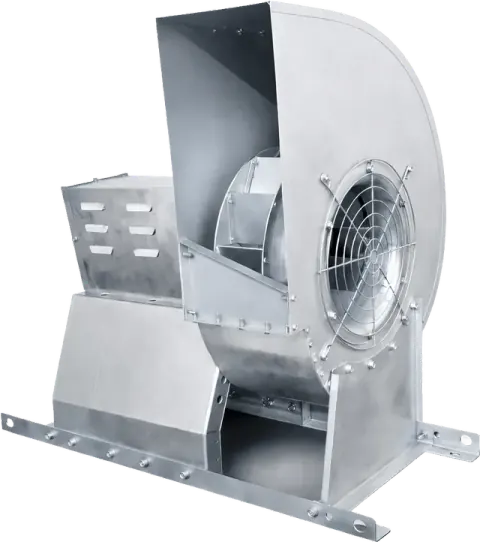
Centrifugal Single Width Fan (SISW)
Heavy-duty SISW centrifugal blower for commercial and industrial supply, exhaust, smoke-spill, dust collection, fume and grain-drying duty — indoor and outdoor.
Need help selecting the right fan?
Our engineers will help you size the direct drive duct cabinet inline fan to your exact application — capacity, static pressure, and installation constraints.