Power Roof Ventilators (Upblast Fan)
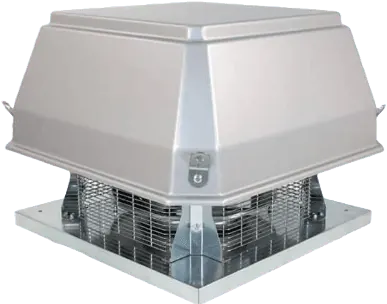
Roof-mounted upblast ventilator with rhombus hood, weather-tight curb cap and aluminium impeller.
About the Power Roof Ventilators (Upblast Fan)
A power roof ventilator (PRV) discharges contaminated indoor air vertically away from the building so it does not get re-entrained into outdoor-air intakes or stick to the roof. The upblast configuration — exhaust pointed straight up — is the building-code default for kitchen and grease exhaust because it lifts plumes well above the roofline. Our PRVs use a rhombus-shaped hood with side cooling fins, so the motor stays in the cool, dry, free-air space rather than sitting in the contaminated air stream.
Engineering Advantages
Vertical discharge prevents recirculation through fresh-air intakes — building-code preferred for contaminated exhaust
Motor in the airstream-free zone runs cooler and lasts longer
Single-piece weather-tight curb cap eliminates roof leaks
Hood withstands high wind speed without lift-off
Key Features
- Rhombus hood — withstands high-speed wind, with cooling fins for motor longevity
- Curb cap — single-piece, weather-tight, with punched mounting holes
- Galvanised housing construction
- Backward-inclined aluminium impeller
- Low power consumption / low sound level
- Available in single and three phase
Construction & Materials
- Aluminium hood and curb cap — corrosion-resistant for outdoor service
- Rhombus-profile hood for low wind loading and structural rigidity
- Galvanised steel housing with continuous welded seams
- Backward-inclined aluminium impeller with hub-mounted balance plugs
- Birdscreen on hood discharge as standard
How to Choose the Right Variant
- 1Calculate exhaust airflow per code (e.g. 0.50 m/s capture velocity over hood face for kitchen Type-I hoods)
- 2Add static pressure for grease filter, duct run, and discharge resistance
- 3Provide minimum 3 m horizontal clearance from any fresh-air intake on the same roof
- 4For grease duty, specify spark-resistant construction and easy clean-out access
Installation Notes
- Mount on a code-compliant pre-fabricated curb (minimum 200 mm above roof finish)
- Seal the curb-to-deck joint with continuous flashing — no fasteners through the field of the membrane
- Wire through a gas-tight conduit; provide a service disconnect within sight of the unit
- Allow safe roof access — most service is done in place
Maintenance Schedule
- Wash hood and impeller every 6 months for grease applications, annually otherwise
- Inspect curb gasket and flashing annually for weather seal integrity
- Tighten all hood-to-curb fasteners after the first storm season
Industries Served
Standards & Compliance
- Designed in line with AMCA 99 / NFPA 96 (kitchen exhaust) where applicable
- Curb construction per SMACNA HVAC roof-curb guidance
Frequently Asked Questions
Why upblast and not horizontal discharge?
Upblast lifts the contaminated plume well above the roofline, reducing the chance of re-entrainment into outside-air intakes. Most building codes mandate upblast for grease and lab exhaust.
Can the hood be opened for cleaning?
Yes — the hood is hinged and held by latches so the impeller is fully accessible without removing the unit from the curb.
Related Centrifugal Fans
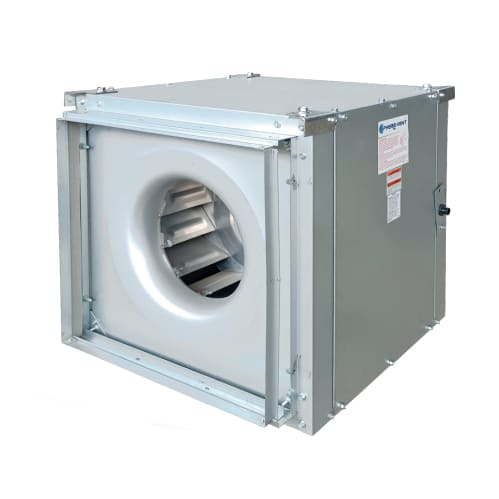
Direct Drive Duct Cabinet Inline Fan
Compact direct-drive cabinet fan with backward-inclined aluminium impeller for clean-air supply and general ventilation.
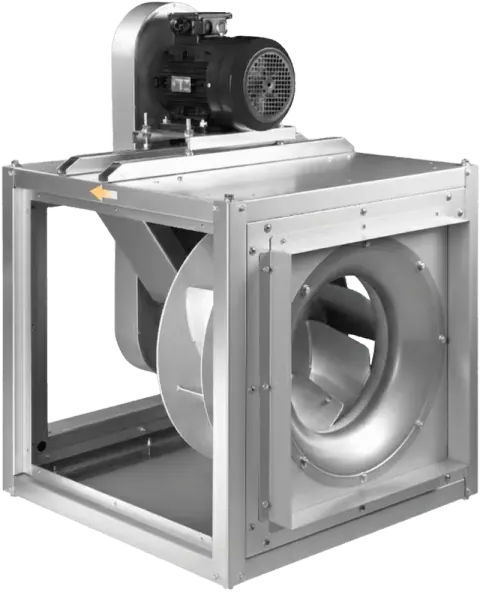
Belt Driven Cabinet Fans
Heavy-duty belt-driven cabinet fan for kitchen, smoke-spill and pressurisation duty — indoor and outdoor.
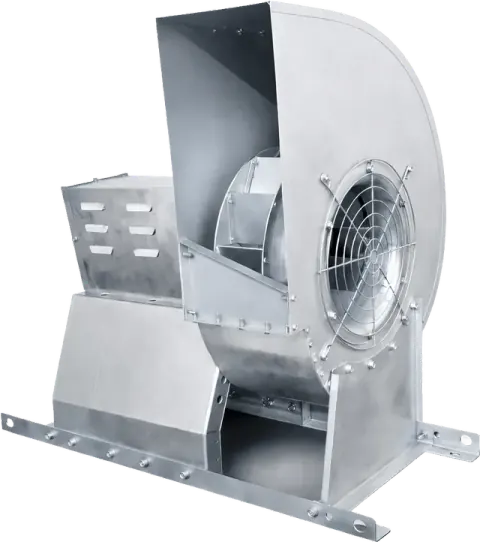
Centrifugal Single Width Fan (SISW)
Heavy-duty SISW centrifugal blower for commercial and industrial supply, exhaust, smoke-spill, dust collection, fume and grain-drying duty — indoor and outdoor.
Need help selecting the right fan?
Our engineers will help you size the power roof ventilators (upblast fan) to your exact application — capacity, static pressure, and installation constraints.